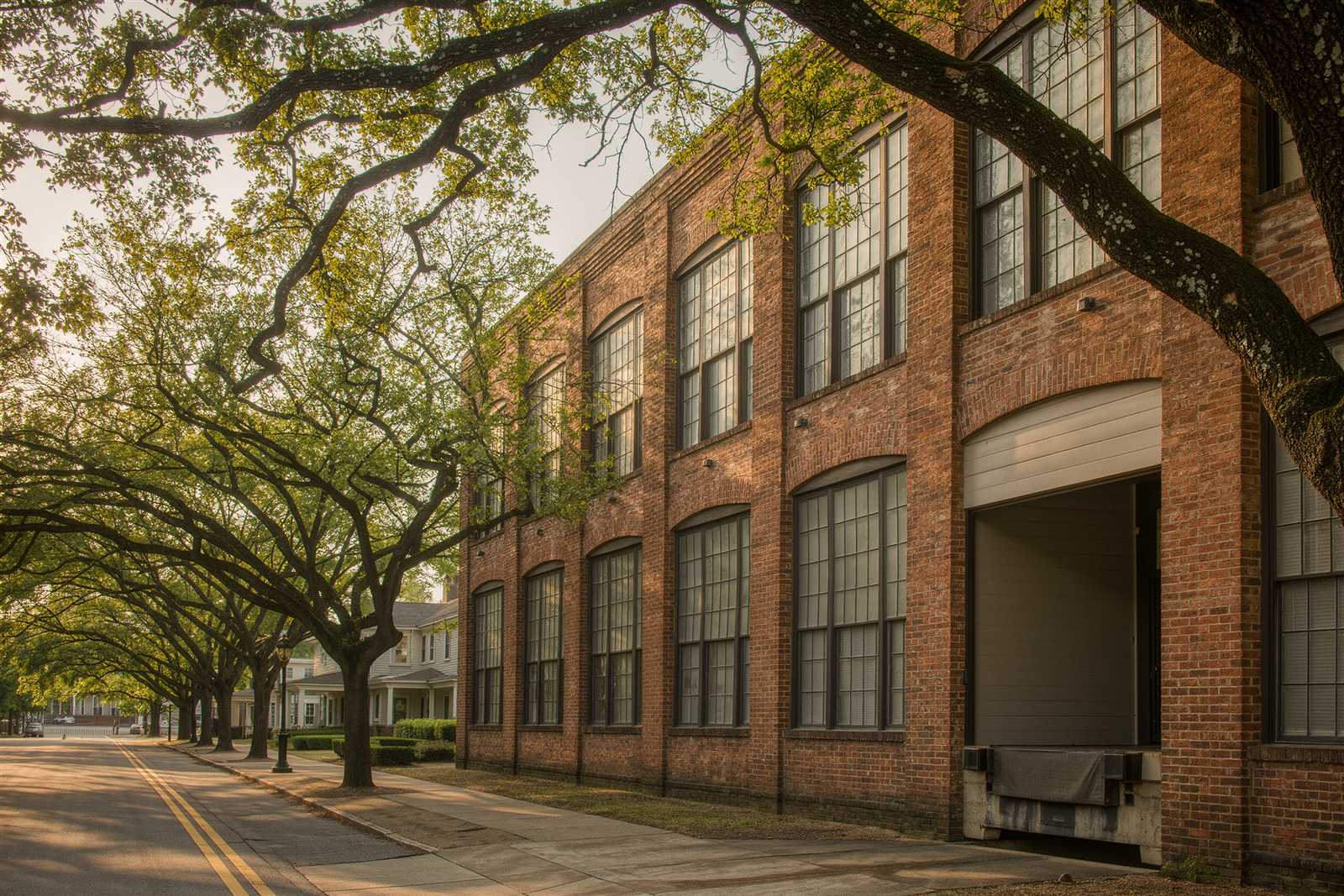
South End: rail, mills and reuse
South End is a high-density commercial and residential neighborhood immediately southwest of Uptown and one of Charlotte's municipal service districts. It developed in the mid-19th century after the city's first railroad line, built in the 1850s, connected Charlotte to Columbia and Charleston. The rail corridor drew textile mills, warehouses and manufacturing, and cotton mills such as Atherton Mill shaped the area through the early 20th century.
After the Second World War, mills and warehouses closed and much of the area was underused industrial property by the 1970s and 1980s. Redevelopment began with the adaptive reuse of former industrial buildings for offices, studios and housing. The LYNX Blue Line opened in 2007, linking South End and Uptown, and a long run of residential, office and retail projects followed. Historic industrial structures stand beside new construction, including the Design District and Atherton Mill.
Dilworth: Charlotte's first streetcar suburb
Dilworth was established in the 1890s by Edward Dilworth Latta on 250 acres southwest of the original city limits. The first electric streetcar of Latta's Charlotte Street Railway Company began operating on May 18, 1891, two days before Dilworth opened. The neighborhood includes Latta Park, planned largely on a grid like the original four wards, and was first designated the Eighth Ward.
Its streets carry mature oaks, sidewalks and front porches. The homes are mostly bungalows with some Queen Anne houses and larger Colonial Revival homes along Dilworth Road East and West. East Boulevard, the main thoroughfare, is lined with restaurants, offices and shops, many in renovated homes. Much of the neighborhood is listed on the National Register of Historic Places as the Dilworth Historic District, which has 1,389 contributing buildings. Car No. 85 of the historic trolley has carried passengers from South End since 1996.
Event types that fit
South End's adapted industrial buildings and rail-side blocks suit dinners, launches, receptions and company parties, with brick walls, large windows and open floors. Dilworth suits garden receptions, rehearsal dinners and small weddings in houses, porches and nearby parks. For a South End venue, ask about loading access, power and parking for deliveries. For a Dilworth home or garden, ask about neighbor notice, restrooms and a covered backup space.
Events that stay on private property, such as a reception inside a converted warehouse or a party in a Dilworth yard, do not need a CDOT street-use permit. A neighborhood block party does, with a petition signed by 51 percent of residents on the affected portion of the street, submitted at least 30 days ahead. See the permits guide.
Questions about hosting here
Why do South End buildings suit events?
Many former mills and warehouses were adapted for offices, studios and residences after the area's industrial decline, and brick walls and large windows give them a distinctive look.
How do I get guests from Uptown to South End?
The LYNX Blue Line opened in 2007 and links South End and Uptown, and Car No. 85 of the historic trolley has run from South End since 1996.
Is Dilworth historic?
Much of the neighborhood is listed on the National Register of Historic Places as the Dilworth Historic District, with 1,389 contributing buildings.
Do I need a permit for a Dilworth block party?
Yes. A block party needs a petition signed by 51 percent of residents on the affected portion of the street, submitted at least 30 days before the event, and residents supply their own barricades.
Does a large tent need approval here?
A tent over 800 square feet needs approval and an operational permit from the Charlotte Fire Department.
More neighborhoods and next steps
Read the permits guide and the tents guide before you commit to a site, then browse the planner directory.