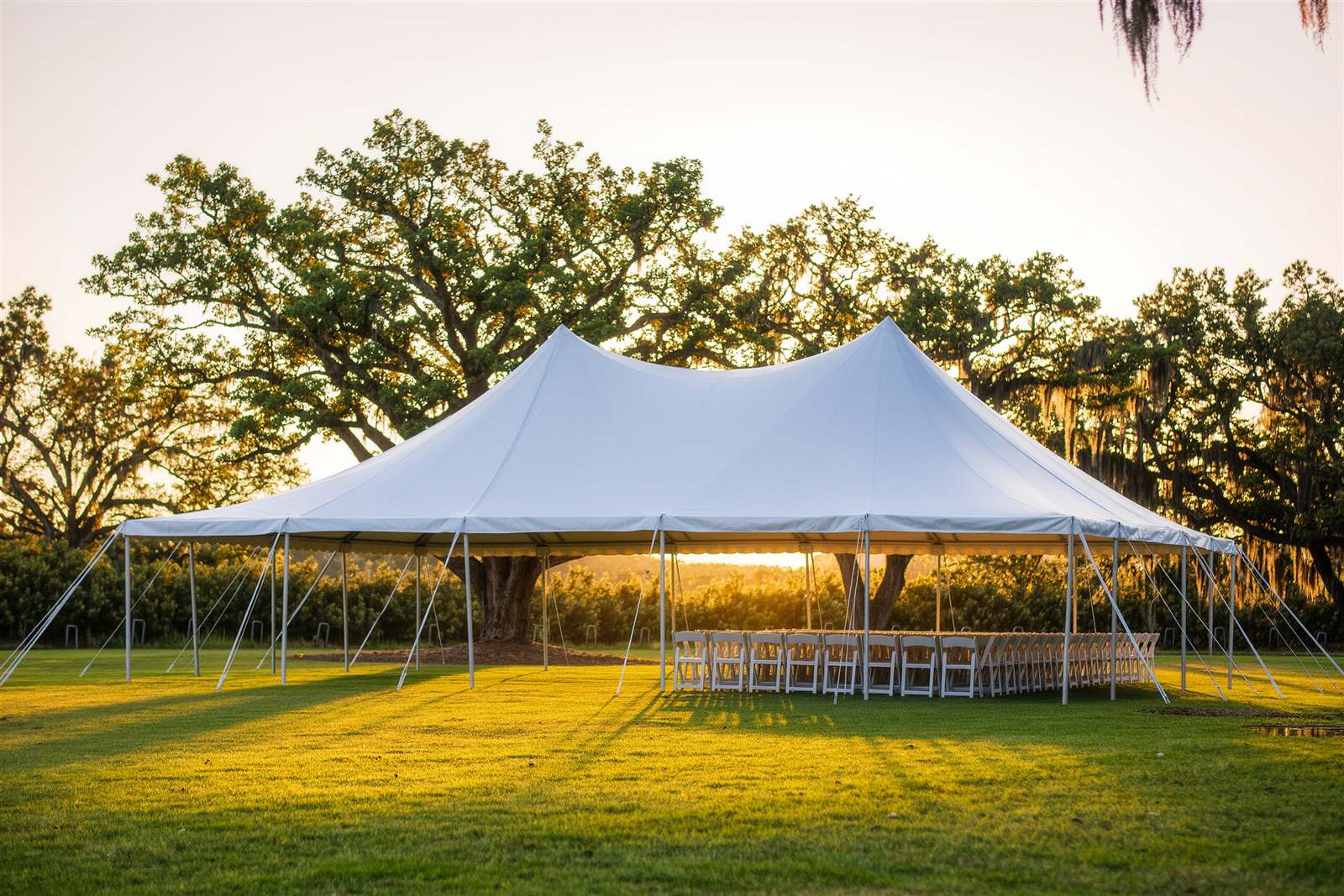
When a tent needs a permit
The Charlotte Fire Department bases its temporary structure guidelines on the North Carolina Fire Code. The erection of any tent or canopy in excess of 800 square feet requires prior approval and an operational permit from the Fire Prevention Bureau. The same applies to multiple tents placed without a 12-foot fire break between them. Membrane structures and inflatables in excess of 400 square feet need a permit too.
Three exceptions apply. Tents or canopies up to 1,800 square feet that are open on all sides, with no sidewalls, drops or other obstructions on 75 percent or more of the perimeter, do not need the permit. Tents used exclusively for camping or funeral services are excepted, and so are temporary stage canopies up to 400 square feet.
What to submit
Before a permit is granted, a certificate must show that the structure is made of materials meeting the flame propagation performance criteria of Test Method 1 or Test Method 2 of NFPA 701. Any tent with an occupant load of 50 or more people also requires a detailed site plan showing seating and table arrangements, the location of any stage and other interior structures, exit arrangements and the location and type of heating and electrical equipment.
The Fire Marshal's Office is at 500 Dalton Avenue, Charlotte, NC 28206. Any alternative to the published requirements must provide an equal level of safety and be approved in advance by the fire official.
Where the tent can go
- Fire apparatus access roads must stay at least 20 feet wide and unobstructed, including by parked vehicles.
- Tents generally stay at least 20 feet from lot lines, buildings, other tents and internal combustion engines, with exceptions for smaller tents not used for cooking.
- A fire break of at least 12 feet is kept on all sides of a tent unless the fire official approves otherwise.
- Tents with an area of 15,000 square feet or more stay at least 50 feet from any building or other tent, except where connecting corridors join them.
- Tents must be properly roped, braced and anchored to withstand the weather and guard against collapse.
Exits, signs and extinguishers
Exits are spaced at equal intervals, and every part of the tent must be within 100 feet of an exit. For an occupant load of 10 to 199, the guidelines call for at least 2 exits of at least 72 inches each. For 200 to 499 the minimum is 3 exits at 72 inches each, and for 500 to 999 it is 4 exits at 96 inches each. Exit doors, where required, open in the direction of travel, and exit signs are posted at each exit for tents serving 50 people or more. Means of egress must be lit at floor level whenever the tent is occupied.
Portable dry chemical fire extinguishers rated at least 2A-10BC are provided, with current inspection tags, mounted on approved hangers. Cooking tents also need a Class K extinguisher.
Cooking, heating and power
Cooking tents stay at least 20 feet from all other tents. Warming food with solid fuel such as Sterno is acceptable if it stays at least 10 feet from an exit or combustible materials. Tents are heated by forced air with the equipment outside, and LP gas containers of 500 gallons or less sit at least 10 feet from the tent. Generators and other internal combustion power sources stay at least 20 feet from tents and are protected from public contact by fencing or barricades. Combustible decorative material is prohibited, and the floor and the area up to 30 feet around the tent are kept free of combustible material. Crowd managers are required at a ratio of one per 250 occupants, and the fire department requires stand-by personnel for tents with an occupant load of 300 or more.
Stage canopies and platforms
Temporary stage canopies are ground-supported, membrane-covered frames over stage areas. They must comply with Section 3105 of the North Carolina Fire Code and ANSI E1.21, and the owner obtains a permit from the fire code official and Mecklenburg County Code Enforcement. Submittals include engineered construction documents, a responsible party on site and an operations plan. County rules separately require a permit for stages over 120 square feet intended for ten or more people and for grandstands. Temporary viewing platforms submit engineered drawings for approval before use.
Questions people ask
How big can a tent be before I need a permit?
A tent or canopy in excess of 800 square feet requires prior approval and an operational permit from the Charlotte Fire Department. Open-sided tents up to 1,800 square feet, with no sidewalls on 75 percent or more of the perimeter, are excepted.
Do I need a site plan?
Yes, for any tent with an occupant load of 50 or more. It shows seating and table arrangements, any stage, exits and the location and type of heating and electrical equipment.
Can I decorate a tent with fabric and paper?
The guidelines prohibit combustible decorative material in tents. Ask the Fire Marshal's Office what your decorations are made of before you commit to them.
How do I heat a tent in winter?
Heating is by forced air with the equipment outside the tent, and LP gas containers of 500 gallons or less stay at least 10 feet from the tent.
Who permits a stage?
Temporary stage canopies need a permit from the fire code official and Mecklenburg County Code Enforcement. Stages over 120 square feet intended for ten or more people need a county permit.